The Witch's Bakery controversy: What We Know
The Witch's Bakery controversy explained: gameplay criticism, the developer response, and what players should know about its cozy storytelling.
Is There Actually a Witch’s Bakery Controversy?
A charming bakery game can disappoint someone expecting a business simulator—and delight someone looking for an emotional adventure. The Witch's Bakery controversy matters because the available criticism concerns what players expect to do, not evidence of a major scandal. Based on the sources reviewed for this article, The Witch's Bakery controversy is better understood as limited feedback about gameplay depth, pacing, and genre expectations, alongside a separate question about the story’s treatment of consent.
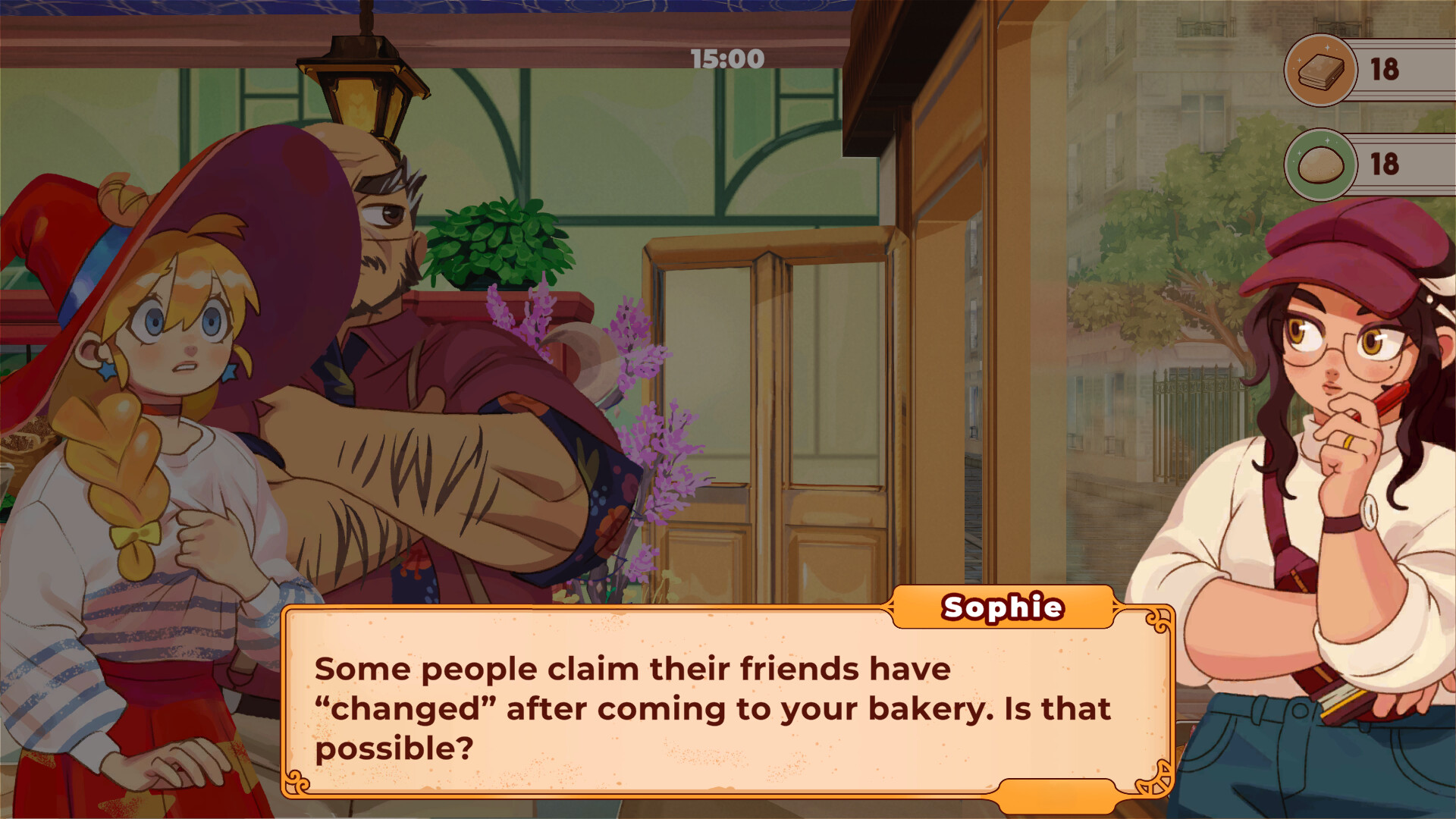
Official screenshot · Source: Steam store
That distinction is important before buying. A small Steam discussion, a positive demo impressions article, and one gameplay stream cannot establish widespread backlash or represent the entire community.
They can, however, help answer a useful question: Does this game’s combination of bakery time management, character conversations, and magical exploration sound right for you?
The assessment below reflects the supplied material available as of October 20, 2026. Demo criticism is identified separately from the streamed player experience, and neither is treated as a comprehensive review of the finished game.
What the Available Sources Actually Establish
The strongest direct evidence comes from a Steam gameplay feedback discussion with a developer response. Its original post criticizes the demo’s mechanics, one player reply raises replayability concerns, and an account marked as a developer explains the game’s adventure focus.
That is a specific exchange—not a community-wide verdict.
The other sources provide useful counterpoints. LadiesGamers’ demo impressions praise the atmosphere and emotional storytelling while noting limited freedom and forgiving mechanics. The streamed Witch’s Bakery playthrough shows an enthusiastic player experience, occasional time-management pressure, and a question about entering customers’ emotional worlds.
| Source | What it supports | What it cannot establish |
|---|---|---|
| Steam feedback thread | Specific demo complaints and a developer reply | How most players feel |
| LadiesGamers demo impressions | One writer’s positive assessment, with reservations | A definitive judgment of the full game |
| Gameplay stream | One player experience and observable early-game systems | Broad community agreement or complete story context |
Why the scale matters
The supplied Steam thread contains one original feedback post and two replies, including the developer response. That is enough to document criticism, but not enough to measure its prevalence.
There are no reliable percentages here for dissatisfied players, no representative survey, and no review-score analysis. Describing The Witch's Bakery controversy as a massive backlash would go beyond the evidence.
A more accurate summary is that a few documented reactions expose a mismatch between different expectations of a cozy game: some players want deeper management, while others welcome a guided, character-centered experience.
The Main Gameplay Criticisms, Explained
The Witch's Bakery controversy becomes easier to understand when its complaints are separated. Difficulty, mechanical depth, freedom, and pacing are related, but they are not interchangeable.
A game can ask for quick inputs without offering complex economic decisions. It can also provide meaningful character stories without offering a branching sandbox.
Bakery time management versus business simulation
In the Steam thread, the original poster’s player experience was that serving customers felt more like a time-management game than the bakery simulation they expected.
Their suggested alternative separated preparation from sales: make stock first, open the shop afterward, and accept the consequences of running out. They wanted decisions about supply and demand to matter more than repeated key inputs.
The streamed player experience shows the existing appeal from another angle. Preparing dough, serving orders, and cleaning the counter create an active routine. The streamer repeatedly enjoys that loop, although some busier moments feel stressful.
| Design question | Critical player experience | Positive interpretation |
|---|---|---|
| Preparing dough | Repeated inputs offer limited strategic depth | Simple actions keep work approachable |
| Serving customers | Quick reactions matter more than planning | Orders give the bakery a lively rhythm |
| Cleaning counters | Another task competes for attention | Maintenance adds variety to the routine |
| Short work periods | Bakery management ends too quickly | Short shifts leave room for the story |
Neither reaction invalidates the other. They reflect different priorities.
Guided progression and replayability
The Steam poster also questioned whether “adventure” adequately described what felt like a linear, conversation-heavy experience. Another player reply worried about reasons to replay a story if choices were limited.
These are community reports about the demo, not proof that the complete game lacks meaningful choices or replay value.
LadiesGamers independently wanted more freedom to wander between story moments. However, its writer explicitly recognized the limitations of evaluating an early slice and still found the available neighborhoods carefully crafted.
The practical takeaway: do not assume that a Paris setting means unrestricted exploration. Equally, do not assume that guided progression makes the story unengaging.
Dialogue speed and controls
The Steam feedback requested faster movement, additional mouse interaction, and text appearing immediately rather than gradually.
These usability concerns can matter even when players like the premise. Waiting through dialogue feels different when reading silently than when a streamer is performing character voices.
The developer response explains that clicking can speed up dialogue. It does not, in the supplied exchange, announce changes to movement speed or promise a redesigned control scheme.
That distinction prevents a helpful tip from being mistaken for a patch commitment.
Heart Magic, Consent, and the Meaning of “Cozy”
A separate issue associated with The Witch's Bakery controversy appears during the streamed player experience: should a heart witch obtain explicit permission before exploring someone’s emotions?
The game’s premise makes that a reasonable narrative question. Lunne uses heart magic to help customers process feelings, including through symbolic spaces called Heart Palaces.
Mild early-story spoilers follow.
During the stream, a question is raised about permission before entering someone’s inner world. The streamer responds by pointing to the bakery’s notice, previously read during the playthrough. That notice explains that the bakery uses emotional magic and that Lunne may enter a customer’s heart.
This establishes that the story includes advance disclosure. It does not settle every ethical interpretation of that disclosure.
| Narrative issue | What the streamed player experience shows | Reasonable question for discussion |
|---|---|---|
| Advance notice | A sign explains the magical service | Will every customer read and understand it? |
| Individual permission | The sign is presented as an explanation | Is general notice enough for intimate intervention? |
| Helping intentions | Lunne wants to relieve emotional distress | Can good intentions coexist with overstepping? |
| Personal boundaries | Emotional exploration reveals private material | How should a helper respect someone’s autonomy? |
These are interpretive questions about fiction, not evidence of real-world misconduct. The supplied material does not show a widespread consent-related campaign or a developer response addressing that topic.
Cozy does not necessarily mean emotionally light
At the beginning of the stream, the player reads a warning describing complex emotional conflict, contemporary social subjects, and nuanced relationships.
The playthrough subsequently includes sadness, emotional suppression, hints of difficult home circumstances, and a scene involving a physical barrier to entering the bakery.
Those themes can fit a comforting game when handled thoughtfully. Still, someone seeking uncomplicated baking may want to check content information first.
The distinction is simple: a gentle visual style describes presentation, not the absence of difficult feelings.
LadiesGamers views the emotional journeys as a major strength. The streamer also enjoys the balance between story and activities. Their positive reactions help explain why the very features that disappoint management-focused players may attract narrative-focused players.
What the Developer Said—and How to Decide for Yourself
The documented developer response to The Witch's Bakery controversy is narrower than the search phrase might suggest. In the Steam discussion, the developer-tagged account thanks the players, acknowledges that people define adventure games differently, and explains that character stories and exploring Paris are central to the intended experience.
It also provides the dialogue-speed tip.
The reply does not announce an overhaul of the bakery economy, additional branching routes, or changes to how heart magic handles consent.
| Feedback topic | Documented response | What remains unconfirmed |
|---|---|---|
| Adventure classification | The team considers character and city exploration central | Whether genre labels would change |
| Slow dialogue | Clicking can accelerate dialogue | Additional text-display options |
| Management depth | No specific redesign described | A deeper economic system |
| Replayability | No specific answer in the exchange | Branching outcomes or repeat-play incentives |
| Heart-magic consent | Not addressed in this thread | Any changes connected to that interpretation |
A practical pre-purchase checklist
Rather than treating The Witch's Bakery controversy as a yes-or-no buying signal, compare your preferences with what the sources actually show.
- Watch an entire bakery shift. A trailer may emphasize pastries and scenery without revealing how frequently you switch between orders, dough preparation, and cleaning.
- Watch an after-work segment. Conversations and social activities are part of the experience, not merely interruptions between business-management sessions.
- Sample Heart Palace exploration. Check whether symbolic puzzles and emotional memories interest you more than challenging puzzle mechanics.
- Read content warnings when relevant. You can learn the general subject matter without necessarily reading detailed plot summaries.
- Separate demo feedback from current features. Check the current Steam listing and announcements before assuming an older criticism still applies unchanged.
A preference-based comparison is more useful than an unsupported controversy score:
| Your priority | Evidence-based expectation |
|---|---|
| Detailed business optimization | The cited demo feedback suggests caution |
| Fast customer-service activities | The bakery includes time-management tasks |
| Character-driven storytelling | Both the developer reply and impressions emphasize it |
| Decorating a magical shop | The impressions and stream show customization |
| Demanding puzzles | LadiesGamers found the demo puzzles forgiving |
| Completely carefree subject matter | The warning and early story suggest heavier emotions |
The fairest conclusion about The Witch's Bakery controversy is therefore modest: the sources document legitimate criticism, but not a verified major scandal or measurable community consensus. Understanding the game’s priorities is more useful than treating its cozy appearance—or a controversy keyword—as a complete description.
FAQ: The Witch's Bakery Controversy
What is The Witch's Bakery controversy about?
The documented criticism primarily concerns the demo’s bakery time management, limited management depth, guided progression, dialogue pacing, and possible replayability. A separate question about permission for heart magic appears in the streamed player experience. The supplied sources do not establish widespread backlash.
Did the developer respond to player criticism?
Yes. A developer-tagged account replied in the Steam feedback thread, explaining that exploring characters’ stories and Paris supports the team’s adventure-game classification. The reply also notes that clicking speeds up dialogue. It does not promise a major gameplay redesign.
Is The Witch’s Bakery a bakery simulator or a story game?
The available material presents a blend of bakery time management, decorating, social activities, and emotional exploration. The developer response emphasizes its adventure identity. Players seeking a detailed economic simulator should examine full gameplay segments rather than relying on the bakery premise alone.
Does the game address consent for emotional magic?
The streamed playthrough shows a bakery sign explaining that Lunne uses emotional magic and may enter customers’ hearts. That provides narrative disclosure, but whether it constitutes sufficient individual permission remains open to interpretation. The supplied sources do not establish how the complete story handles every boundary-related situation.
Related Guides
The Witch's Bakery discord: Official Join Guide
Find The Witch's Bakery Discord invite shared by Sunny Lab Games, learn where to find dev updates, and join the community safely.
The Witch's Bakery kickstarter: Funding & Rewards
Explore The Witch's Bakery Kickstarter results, gameplay, rewards, and platform details, plus what backers should verify before buying.
The Witch's Bakery reddit: Where to Find Help
Find The Witch's Bakery discussions, check launch fixes, compare gameplay expectations, and learn where to get reliable community help.
The Witch's Bakery delayed: New Date and Launch Guide
The Witch's Bakery delayed its August launch to October 14. Learn why, which platforms were announced, and what to check before buying.
The Witch's Bakery mac: Support and Play Options
Is The Witch's Bakery on Mac? Check native macOS support, Windows requirements, Apple silicon caveats, and practical options before buying.